Choose timezone
Your profile timezone:
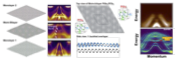
Van der Waals (vdW) heterostructures provide a powerful platform for engineering emergent quantum phenomena through artificial stacking, interfacial coupling, and moiré modulation. In ultrathin vdW systems, the reduced dimensionality and weak interlayer bonding can give rise to electronic structures that deviate strongly from the conventional pristine-layer picture. In this talk, I will present how angle-resolved photoemission spectroscopy (ARPES), combined with first-principles calculations, can directly reveal moiré-driven electronic reconstruction and proximity-induced effects in ultrathin vdW heterostructures. Although vdW interfaces are often considered weakly coupled due to the absence of direct out-of-plane covalent bonding, our results show that interfacial hybridization can be unexpectedly strong. ARPES band mapping reveals emergent bands, hybridized gap openings, and substantial interfacial charge transfer, demonstrating that the electronic states of vdW heterostructures cannot always be described as a simplesuperposition of pristine constituent layers. Instead, interfacial coupling and moiré modulation can generate new quantum states with distinct momentum-, thickness-, and interface-dependent characteristics. These results highlight the importance of momentum-resolved probes for understanding and designing quantum materials beyond the pristine-layer limit.
Figure: Moiré-driven quantum effects revealed by ARPES band mapping.
References:
1) M. K. Lin, et al. Phys. Rev. Lett., 125, 176405 (2020).
2) M. K. Lin, et al. ACS Nano, 15, 3359 (2021).
3) Y. S. Liao, …., M. K. Lin*, J. P. Chou* ACS Nano, 20, 5102 (2026).
4) Y. S. Liao, …., J. P. Chou*, M. K. Lin* Nano Lett., accepted (2026).